Zirconium cladding operates at 300–400 °C, where creep governs fuel-rod integrity. The institute previously used uniaxial creep frames: one specimen gave one stress level and needed more than 500 h, while irradiated specimens are extremely scarce.
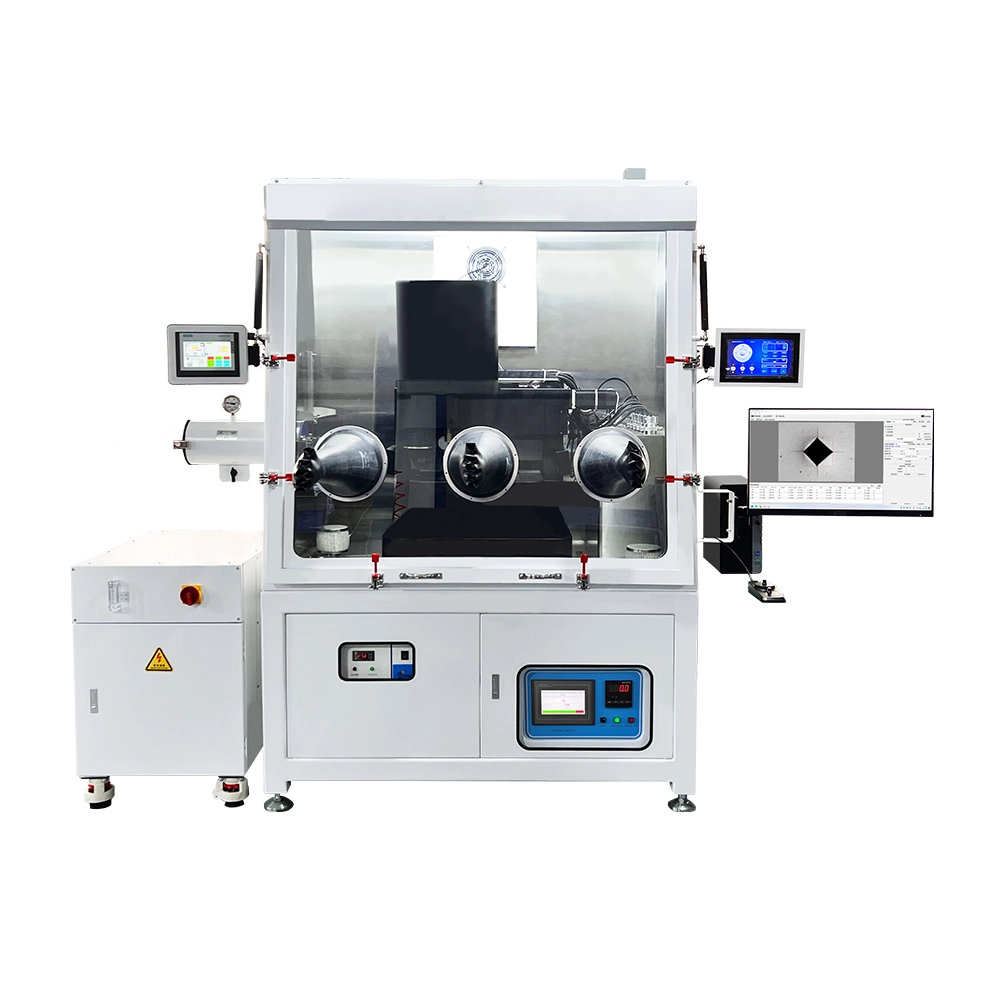
Solution: instrumented indentation on IMAS-HT700CM at 400 °C under argon, 5 N held for 7200 s, depth versus time recorded and converted to an equivalent stress exponent using Oliver-Pharr and creep-compliance models; six indents per specimen.
Result: 12 data points per specimen, drift within 0.4 µm over 2 h; creep compliance rose 22% after irradiation, consistent with published neutron data; campaign time fell from 500 h to 4 h and specimen consumption by 80%.