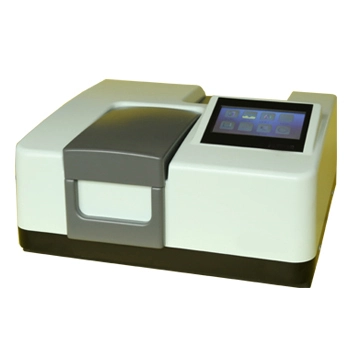
7600S Double-beam UV-Vis spectrophotometer
Rapid quantitative elemental analysis
- Measuring range190~1100 nm 波长范围
- Illumination氘灯 + 钨灯组合光源
 ICPS-7510 · 2026-11-17 · +86 21 5748 2007
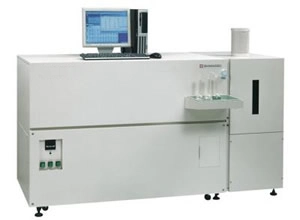
Rapid quantitative elemental analysis
By submitting you agree to our privacy policy.
The ICPS-7510 delivers rapid quantitative elemental analysis for metals and solutions in melt control, incoming and final inspection.
The ICPS-7510 delivers rapid quantitative elemental analysis for metals and solutions in melt control, incoming and final inspection.
| Control | 电感耦合等离子体光源(ICP-OES) |
|---|---|
| Measuring range | 痕量元素 ppb 级分析 |
| Software | 元素定性定量分析工作站 |
| Power supply | AC 220 V |
* Generated by rule engine over the product database; for pre-selection only.
Spark OES: a high-voltage spark in argon excites the metal surface; a grating disperses the emission lines onto CCD/PMT arrays, and calibration curves convert intensities into concentrations — 20–30 elements in 10–30 s, ideal for melt control and incoming checks.
ICP-OES: solutions nebulise into an argon plasma (6000–10000 K) for complete atomisation, enabling ppb-level multi-element analysis.
UV-Vis: Beer-Lambert law A = εbc with double-beam referencing for stable baselines (e.g. 7600S).
Flame photometry: alkali metals emit characteristic light in the flame with intensity proportional to concentration — simple and economical for K/Na/Li.
1. Beer-Lambert: A = εbc; with ε=2000 L/(mol·cm), c=2×10⁻⁵ mol/L, b=1 cm, A = 0.040; keep absorbance between 0.1 and 0.8.
2. Calibration: ≥5 points with r² ≥ 0.999; run a mid-check each batch and recalibrate on >5% drift.
3. Detection limit: MDL = 3σ/slope; σ=0.002 Abs and slope 0.05 Abs/(mg/L) give 0.12 mg/L.
4. Type standardisation (OES): correct drift per element ki = Rref/Rmeas with a control sample at the start of each shift.
5. Internal standard: ratio R = Ielement/Imatrix cancels excitation fluctuations.
| Standard | Title | Scope |
|---|---|---|
| GB/T 4336-2016 | Carbon and low-alloy steels by spark OES | Steel quick analysis |
| GB/T 11170-2008 | Stainless steel by spark-discharge OES | Grade judgement |
| GB/T 20975 series | Aluminium alloys by OES | Non-ferrous metals |
| GB/T 9721-2006 | Chemical reagents — UV spectrophotometry | UV-Vis quantitation |
| ISO 11885 | Water quality — ICP-OES for selected elements | Environmental ICP |
Melt-control programs need per-grade control samples each shift; note spark conditions for interstitial elements.
1. Principle follows element and concentration: major and minor elements (0.001–30%) in metal use spark OES; trace levels (ppb to ppm) use ICP; single-element rapid quantification uses spectrophotometry or flame photometry.
2. Three things about OES: channel count and element coverage, detection limits (C/S/P are hardest), argon flush and standardisation. TY-9000 class suits multi-base steel and non-ferrous; Q4/Q8 suit high accuracy and precious metals.
3. Preparation decides data quality: flat, oxide-free, oil-free surfaces with a cutter and grinder; solid standards must match the matrix or matrix effects bias results by more than 10%.
4. ICP does not replace OES: OES is fast (90 s) on solid metal; ICP is slow (2 h preparation) on liquids and traces. Use OES for incoming metal, ICP for water.
5. Spectrophotometer by wavelength: visible (325–1000 nm) for routine colorimetry, UV-Vis (190–1100 nm) for organics and low concentrations, flame photometry for Na/K/Li/Ca.
6. Site and consumables: OES needs 99.999% argon, stable power and a dedicated earth; ICP needs a fume hood and argon; spectrophotometers need dark, stable temperatures.
| Model | Principle | Strength | Typical use |
|---|---|---|---|
| TY-9000 / TY-9610 | Spark OES | Multi-element in steel and non-ferrous | Furnace analysis, incoming checks |
| Q2 / Q4 | Spark OES | Major elements in metals | Foundries, machining |
| Q6 / Q8 | High-accuracy OES | Trace C/S/P, precious metals | Special steel, precious metals |
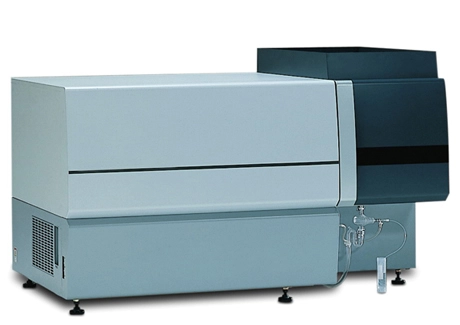
| ICPE-9000 / ICPS-7510 | ICP-OES | ppb–ppm multi-element | Water, soil, food |
| UV1800 | UV-Vis | Organic and inorganic colorimetry | Chemical, pharma, environment |
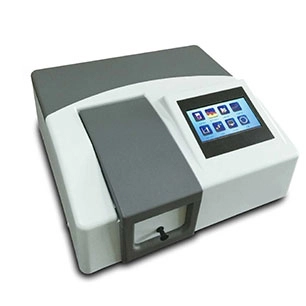
| 7600S | Visible | Routine colorimetry | Teaching, routine testing |
| FP640 / FP6410 / 6400A | Flame photometry | Na/K/Li/Ca | Soil, fertiliser, cement |
What keeps data trustworthy: type standardisation with high and low standards every shift, full standardisation monthly, and matrix-matched standards.
Metals: prepare a flat face by lathe or spectral grinder; specimens ≥3 mm thick and ≥φ20 mm, cooled before sparking.
Burn: 5–10 s flush plus 10–20 s analysis; ≥3 burns averaged, RSD >3% triggers investigation (gas, surface, segregation).
Calibration: one- or two-point type standardisation each shift; weekly full-curve checks; retain certificates.
UV-Vis: matched cells (≤0.5%), blank zeroing, absorbance 0.1–0.8.
ICP: complete digestion, on-line internal standard, matrix-matched standards, dilute high-salt samples to protect the nebuliser.
Rapid quantitative elemental analysis
Rapid quantitative elemental analysis
Rapid quantitative elemental analysis
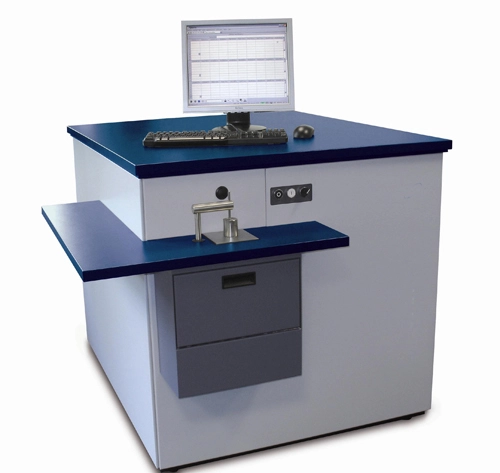
Rapid quantitative elemental analysis