Choosing Mounting Resins: When Hot Compression versus Cold Mounting
Hot mounting is fast and dense but 150-180 °C can alter sensitive structures; cold mounting is heat-free but takes 6-24 h. Choose by heat tolerance and schedule.
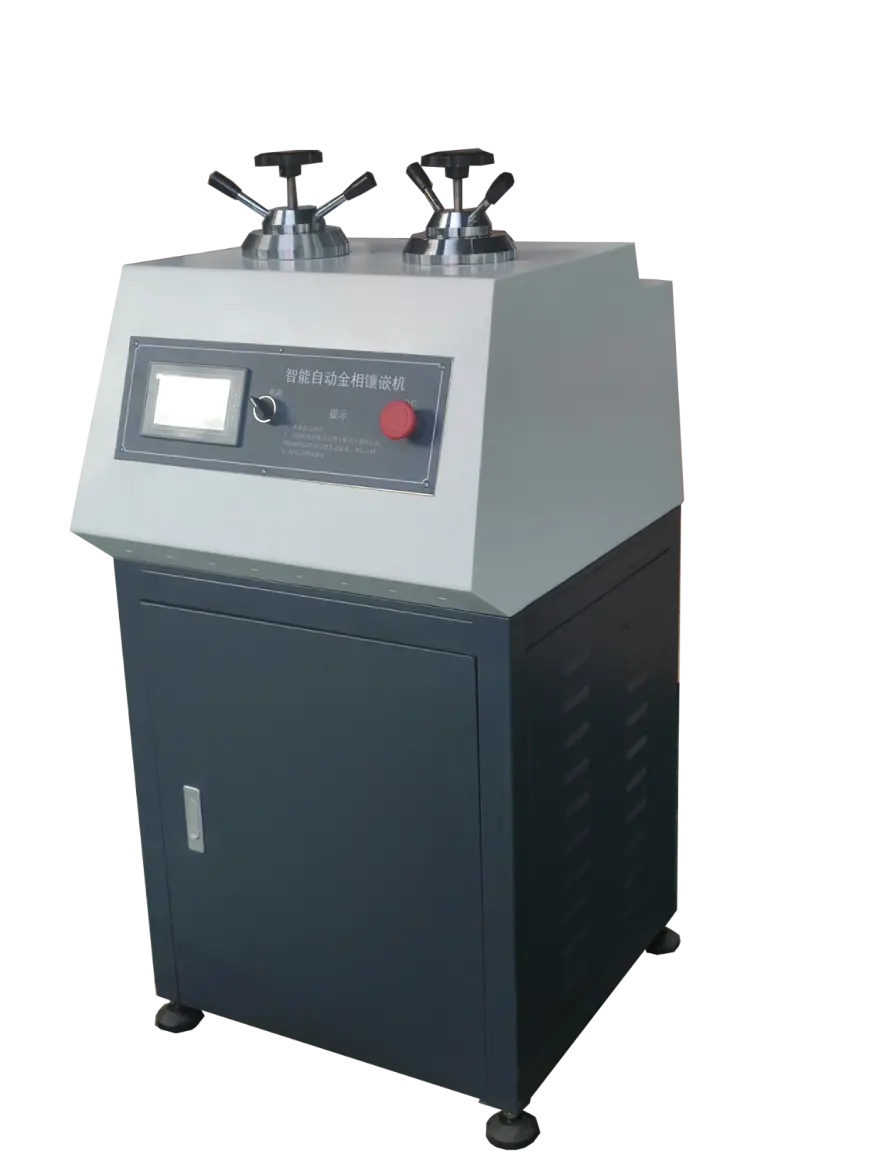
Two processes compared
Hot compression mounting forms specimen and resin powder under heat and pressure: phenolic at about 150 °C and 200 bar for 5-8 minutes — dense, hard, with good edge retention and low unit cost, ideal for routine steel batches. Cold mounting pours two-part resin, epoxy or acrylic, curing at room temperature with zero heat input for sensitive materials; epoxies need 6-24 hours, while fast acrylics set in 15-30 minutes with exotherm peaks up to 90 °C.
Choose by material
- Quenched martensitic parts: mounting above the tempering temperature softens the structure — low-temperature tempered parts below 200 °C must not be hot-mounted;
- Age-hardened aluminium, zinc alloys, plastics: hot-mount temperatures can alter the structure, so cold-mount;
- Porous parts such as powder metallurgy and castings: vacuum-impregnate with cold resin to fix the pore morphology;
- Edge-critical specimens like cases and coatings: choose hard low-shrinkage phenolic or mineral-filled epoxy to minimize edge rounding.
Shrinkage and edge retention
Cure shrinkage is the root cause of edge rounding: phenolics shrink about 0.5 percent, general epoxies 1-2 percent, low-shrinkage modified epoxies under 0.2 percent. Shrinkage opens an interface gap where polishing slurry washes out rounding and tails. Countermeasures: low-shrinkage resins, clean and dry specimens before mounting, and for edge-critical work clamp a same-material backing strip against the face before mounting.
Quality checks
A good mount shows no bubbles, which trap abrasives; no interface gap, no step felt by a fingernail; and hardness matched to the specimen, since soft resin lets the specimen stand proud in relief. For conductive needs such as SEM or electropolishing, use copper- or graphite-filled conductive mounting powder. Standard diameters are 25, 30 and 40 mm — keep one size per batch for automatic polishing fixtures.