Atmosphere Control in Hot Hardness Testing: Ultimate Vacuum, Argon Purging and Oxygen Criteria
Titanium alloys absorb oxygen rapidly above 800 °C; reaching 10⁻² Pa is not enough — oxygen partial pressure and leak rate are what matter.
Why ultimate vacuum does not equal low oxygen
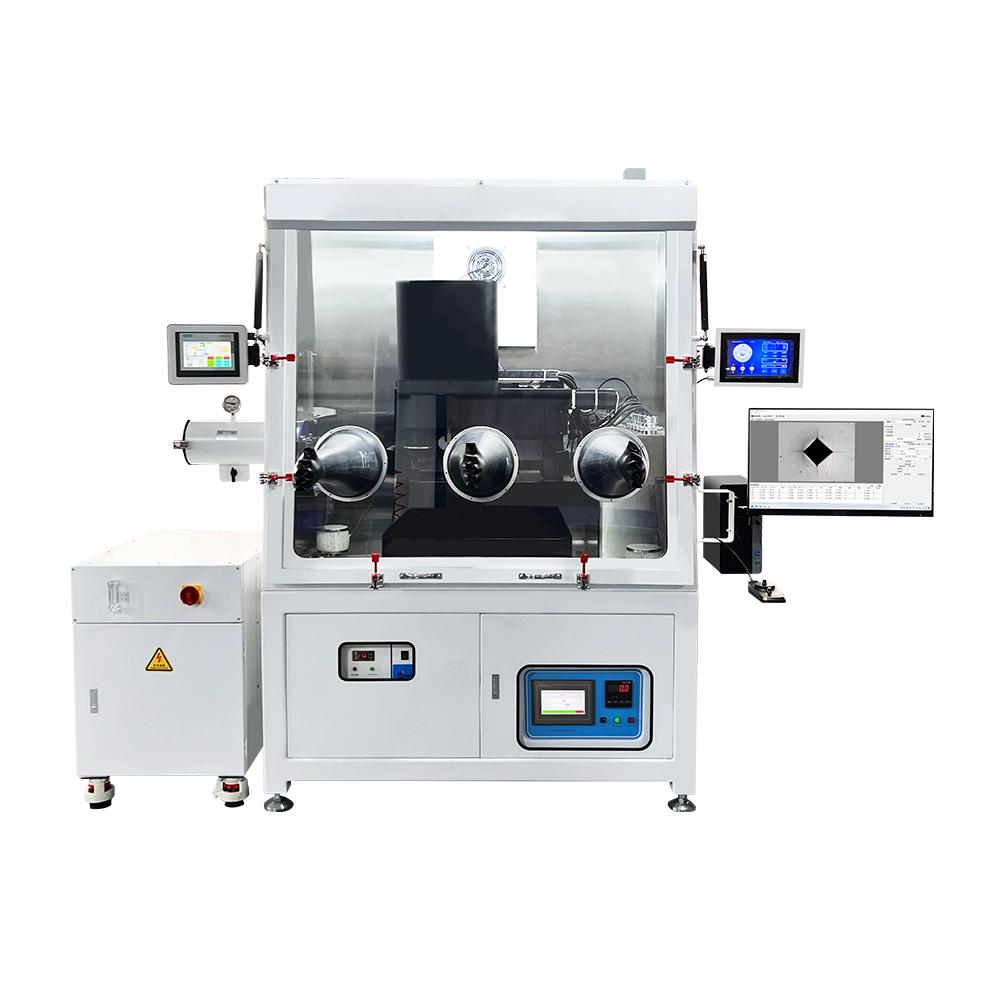
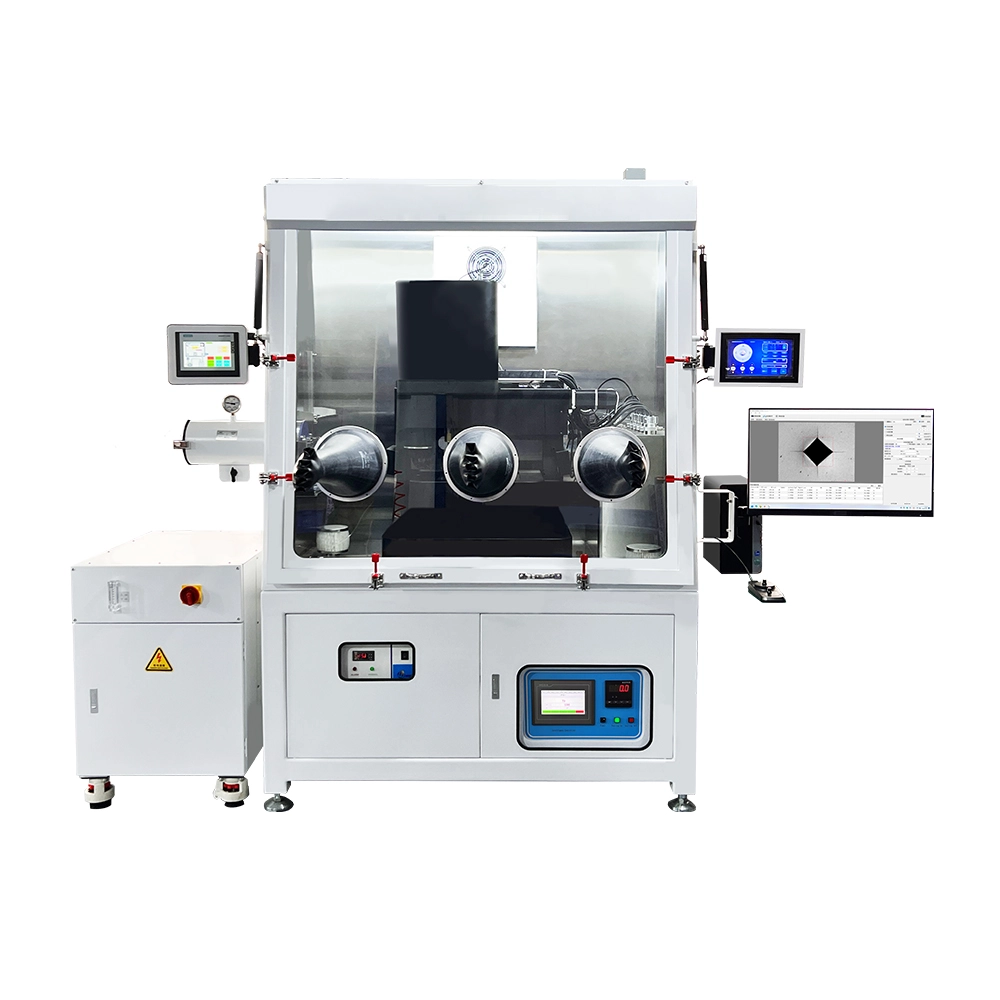
What hot hardness testing really needs is a low oxygen partial pressure, not just a high vacuum. At a total pressure of 10⁻² Pa, if water vapor and oxygen dominate the residual gas, the oxygen partial pressure can still exceed 10⁻⁴ Pa. Titanium and zirconium alloys then grow an oxygen-rich alpha case within tens of minutes above 800 °C, raising surface hardness by 50 to 150 HV, so the instrument measures the contaminated layer rather than the base metal. Engineering practice adopts an oxygen partial pressure of 10⁻⁴ Pa or better, or an oxygen content below 10 ppm, as the acceptance criterion.
Purge-and-backfill procedure
For furnaces with modest pumping speed, use cyclic purging: pump to the 10⁻² Pa range, backfill with 99.999 percent argon to slight positive pressure around 0.105 MPa, hold five minutes, and pump down again. Three cycles dilute oxygen by more than three orders of magnitude. Afterwards maintain a small argon flow of 0.5 to 1 L/min at positive pressure to suppress the effect of inward leakage. The argon should pass a deoxidizing dryer with a dew point below -60 °C.
Leak rate and monitoring
The static leak rate of the chamber, measured by the pressure-rise method, should be below 10 Pa·L/s: close the pumping valve, record the pressure rise over 30 minutes, and multiply by chamber volume. In-situ monitoring can use a zirconia oxygen probe (sensitive down to about 10⁻¹⁰ Pa oxygen partial pressure, operating above 700 °C) or a residual gas analyzer watching the mass-32 and mass-18 peaks. Outgassing during heat-up temporarily raises the oxygen level, so hold at the test temperature for 20 to 30 minutes and indent only after the oxygen partial pressure falls back below the criterion.
Verifying the result
Two simple checks tell whether the atmosphere was adequate. First, appearance: titanium specimens should keep their metallic luster; blue or gold interference colors indicate oxidation. Second, repeatability: the relative standard deviation of five indentations at one temperature should be under 3 percent. If scatter is large and drifts systematically with time, suspect the atmosphere before blaming the indenter. The report should state vacuum level, gas purity, flow rate and soaking time so that results can be reproduced and compared between laboratories.