Quy trình sàng lọc RoHS: kết nối XRF sơ bộ và hóa nghiệm xác nhận
XRF sàng lọc Cd/Pb/Hg/Cr/Br trong 30 s; mẫu vượt hoặc vùng xám chuyển hóa nghiệm theo IEC 62321.
The two-tier logic
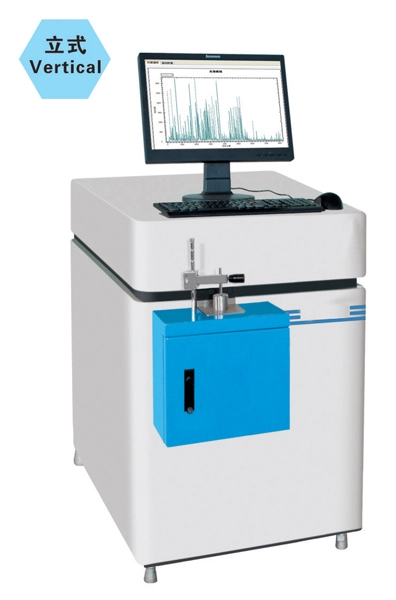
RoHS limits per homogeneous material: cadmium 0.01 percent, lead, mercury, hexavalent chromium, PBB and PBDE 0.1 percent each. XRF is non-destructive, delivers results in 30-60 s and accepts whole products — ideal for screening. But XRF sees total chromium without distinguishing Cr(VI), total bromine without PBB/PBDE speciation, and struggles with light-element matrices. Hence the IEC 62321 workflow: XRF triages, and only failures plus grey-zone samples proceed to wet chemistry.
XRF screening essentials
Decisions fall in three bands: below 70 percent of the limit is PASS, above 130 percent is FAIL, and the middle band is INCONCLUSIVE and must be confirmed. Prerequisites: disassemble into homogeneous materials first — mixed-material readings are meaningless; use a 1 mm collimator for tiny samples; on coatings account for substrate contribution or strip first. Verify daily with RoHS reference blocks; typical detection limits run 10 mg/kg for Cd and 5 mg/kg for Pb.
Confirmation paths
Per IEC 62321, choose by element: Cd and Pb by microwave digestion with ICP-OES or AAS; Hg by cold-vapor AAS or ICP; Cr(VI) by alkaline digestion plus UV-Vis colorimetry with diphenylcarbazide at 540 nm, or ion chromatography; PBB/PBDE by Soxhlet extraction with GC-MS. Confirmation laboratories should hold CNAS or equivalent accreditation, with validated spike recoveries of 80-120 percent.
Reporting and data management
Screening reports state instrument model, collimator, measurement time and decision band; confirmation reports state digestion method and instrument. Link both tiers through one homogeneous-material ID for complete compliance evidence. At supply-chain level, sample by supplier risk: green suppliers at 10 percent quarterly, new suppliers with full first-lot confirmation — cheaper than 100 percent testing and clearer in accountability.