ICP-OES so với AAS: giới hạn phát hiện, thông lượng và chi phí vận hành
ICP-OES đo đồng thời nhiều nguyên tố mức ppb; AAS đo từng nguyên tố, lò graphit đến ppt.
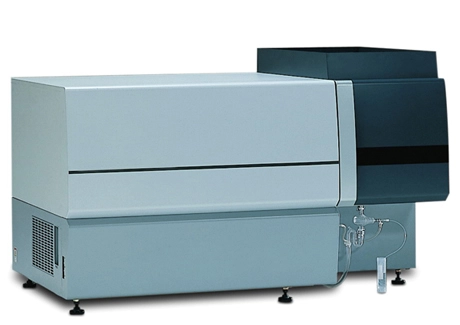
Principle and capability
ICP-OES excites sample solution in a 6000-10000 K argon plasma and reads many elemental emission lines at once, with typical detection limits of 0.1-10 μg/L and a linear range of four to six orders of magnitude, covering major to trace levels. Atomic absorption splits into flame (FAAS, 0.01-1 mg/L) and graphite furnace (GFAAS, 0.01-1 μg/L from a 20 μL injection) modes, measuring one element at a time with element-specific lamps.
Comparison table
| Item | ICP-OES | FAAS | GFAAS |
|---|---|---|---|
| Detection limit | ppb class | sub-ppm class | sub-ppb to ppt |
| Element throughput | 70+ per run | 1 per run | 1 per run |
| Time per sample | 1-2 min full spectrum | ~30 s per element | 3-5 min per element |
| Matrix tolerance | Good (hot plasma) | Fair | Needs modifiers |
| Running cost | Argon 10-20 L/min, high | Acetylene, low | Graphite tubes, medium |
Selection logic
More than twenty samples a day with five-plus elements each: ICP-OES, ten times the efficiency. Only routine elements like copper, zinc, sodium at ppm levels: FAAS is the value pick. Trace lead and cadmium in drinking water or high-purity materials below ppb limits: GFAAS or straight to ICP-MS. For direct solid analysis like alloy grade sorting, skip both and look at spark OES or XRF.
Quality control
ICP-OES batches carry blanks, duplicates and certified reference materials, with internal standards such as yttrium or indium correcting matrix effects and drift; verify wavelength calibration daily with a mercury lamp or mixed standard. AAS fights matrix interference with standard additions. For both, digestion quality — typically microwave — caps the achievable result: incomplete digestion defeats any instrument.