Thiết kế quy trình mài-đánh bóng: chuỗi thông số và lỗi thường gặp
Mỗi bước phải loại bỏ lớp biến dạng bước trước; bỏ bước sẽ cho tổ chức giả.
Deformed-layer handover
The core logic of metallographic preparation: every step removes material while introducing a new, shallower deformed layer, and as long as the next step removes more than that depth, the final surface shows the true structure. Deformed depth runs about half to one abrasive size: P320 paper (46 μm grains) leaves 20-40 μm, P1200 about 10 μm, 9 μm diamond 2-3 μm, 1 μm about 0.5 μm, and final polish with 0.05 μm alumina or silica under 0.1 μm. A typical steel sequence: P320→P600→P1200→P2500→9 μm→3 μm→1 μm→final.
Parameter chain
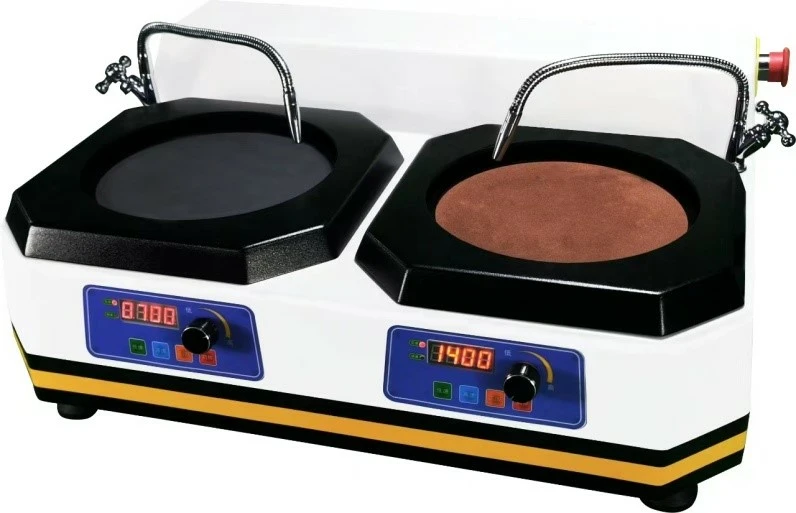
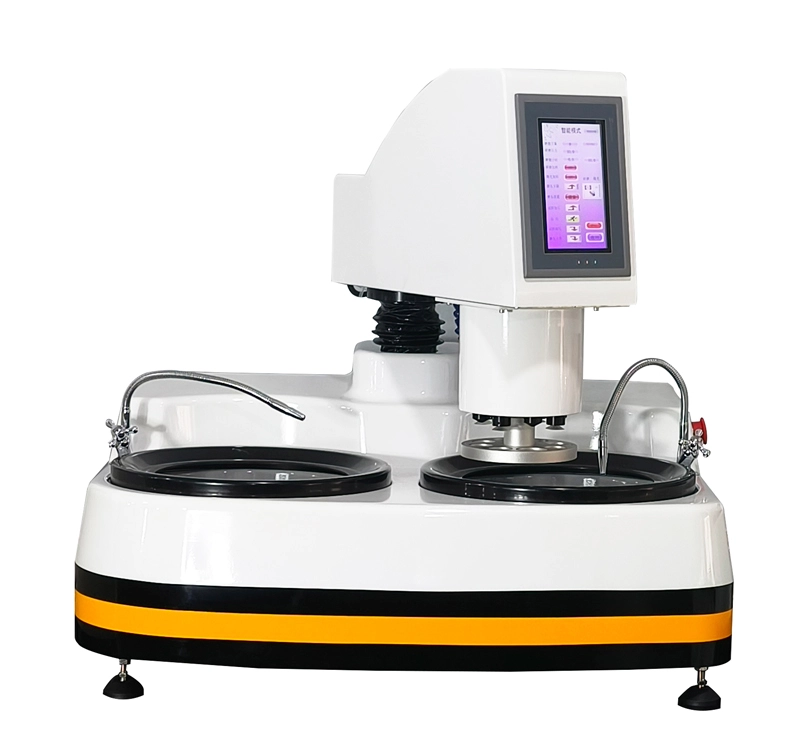
Time each step to erase the previous scratches: once the scratch pattern is uniform in one direction, extend by 30 percent. Match speed and pressure: rough grinding at 150-300 rpm with 20-30 N per specimen; fine polishing at 100-150 rpm with 10-15 N. For soft metals like aluminium and copper, ultrasonically clean in alcohol one minute between steps against abrasive embedment, and rotate 90 degrees at each paper change so leftover scratches are obvious.
Defect quick reference
| Defect | Cause | Fix |
|---|---|---|
| Comet tails | Dislodged grains or phase pull-out dragging | Fresh cloth, lower pressure |
| Edge rounding | Mounting gap, excess pressure | Low-shrinkage mount, less pressure |
| Relief | Differential removal of hard/soft phases, over-polishing | Shorten final polishing |
| Phantom scratches | Skipped steps, contaminated cloth | Repeat from the previous step |
Electropolishing supplement
For materials that deform readily — austenitic stainless, pure aluminium — electropolishing replaces the final step: the specimen as anode in an electrolyte such as 10 percent perchloric acid in alcohol, at 20-40 V and below 30 °C for 30-90 s, yields a deformation-free surface. Note that electropolishing attacks inclusions and second-phase interfaces preferentially, so cross-check inclusion assessments against mechanically polished results.