Hot hardness: atmosphere, thermal equilibrium, indentation measurement
Impure atmosphere and a cold indenter can shift hardness by more than 10%.

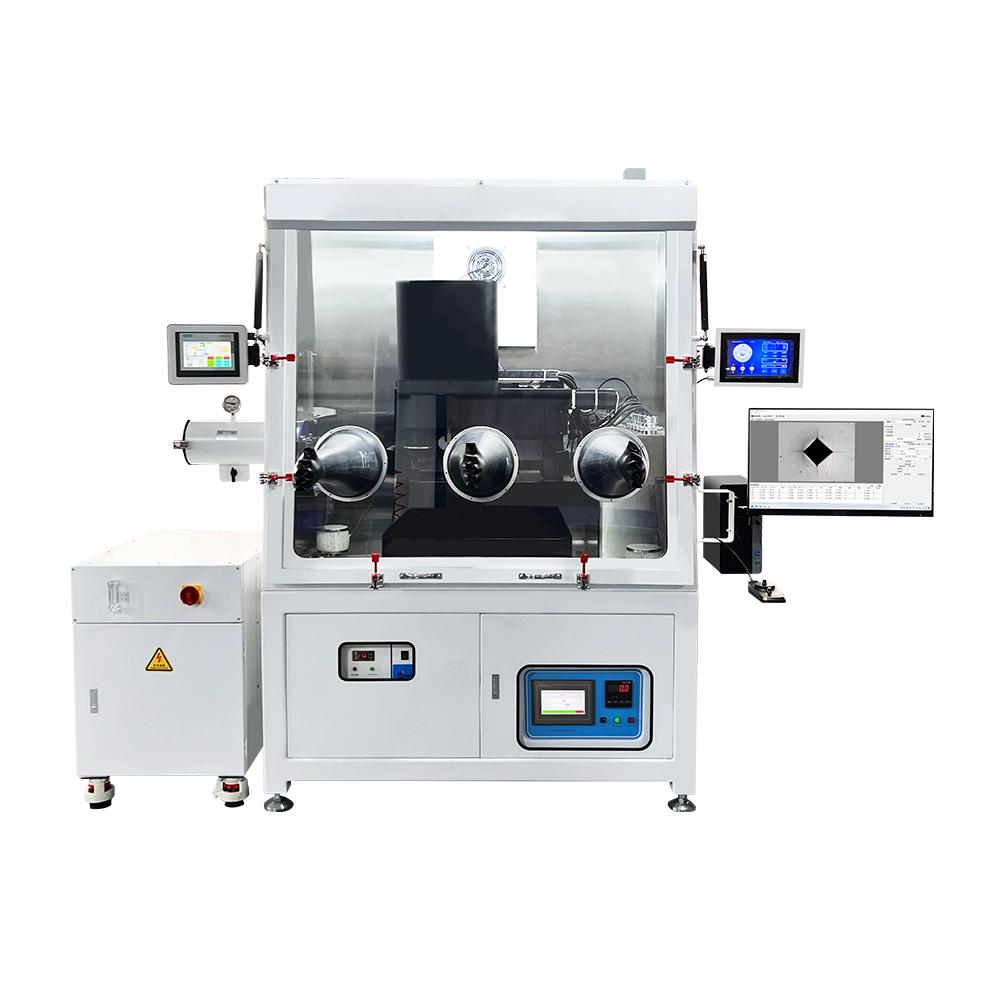
Hot hardness is not a room-temperature tester inside a furnace. Atmosphere comes first: titanium and refractory metals absorb oxygen above 800 °C and form a hardened oxide layer, so the reading reflects the oxide. Vacuum at or below 10⁻² Pa, or high-purity argon, is essential.
Thermal equilibrium is second: a cooler indenter chills the contact, making a shallower indentation and a higher reading. Hold indenter and specimen at the same temperature or apply the standard correction, and state the soak time, typically 20–30 minutes.
Indentation measurement is third: ordinary objectives cannot be used hot. Use a high-temperature optic, or measure after cooling with a shrinkage correction. Report temperature, atmosphere, dwell and indenter material together.