Standardization of Spark OES: High-Low Calibration and Drift Monitoring
Spark OES re-anchors curve ends with high-low standards every shift; drift beyond control limits triggers re-standardization before grade calls go wrong.
Why standardize
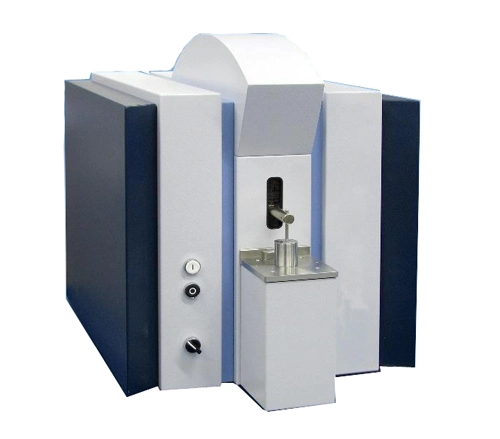
The factory working curves of a spark OES are built on dozens of certified reference materials, but the optics drift slowly with temperature, argon purity and lens contamination — typically 1-3 percent of signal per eight hours. Standardization re-anchors the curve ends using high and low standardization samples: the high point restores slope, the low point restores intercept, returning the curve to its as-built state. It is drift correction, not recalibration.
Procedure
Standardize at shift start, after four hours of continuous analysis, on ambient swings beyond 5 °C, and after argon changes. Spark the high sample three to five times, discarding the first burn, average the rest, then do the same with the low sample; the software computes correction factors so that I_corr=α·I_meas+β. Always verify afterwards: spark a mid-level CRM and check each element against its certificate within in-house limits, such as ±0.02 percent carbon and ±2 percent relative for alloying elements.
Type standardization
For a specific grade, say 304 stainless, run a single-point type standardization with a reference material of the same or nearly identical composition; this compresses relative error in that grade window to ±0.5-1 percent, far better than the general curve. The price is one reference block per grade and mandatory pre-analysis checks. For incoming grade verification, type standardization is referee-grade practice.
Monitoring and maintenance
Build a control-sample database and chart readings: warn at 2σ mean shift, stop and investigate at 3σ. Common drift sources by frequency: contaminated entrance windows, accelerated when argon falls short of 99.996 percent; worn stand electrodes changing the gap and excitation; and uncontrolled ambient temperature. Redress electrodes every 500-1000 burns and supply argon from liquid tanks or purifiers. Log every standardization time and coefficient — that log is the traceability evidence at audit.